

I17th century
The palazzo of the Counts Franceschini
The palazzo was built in the seventeenth century on the square of Montenovo, the old name of Ostra Vetere. The piano nobile keeps its original stuccoes, paintings and terracotta floors.
The piano nobile of a seventeenth-century palazzo in the heart of Ostra Vetere, between the hills of the Marche and the sea at Senigallia.
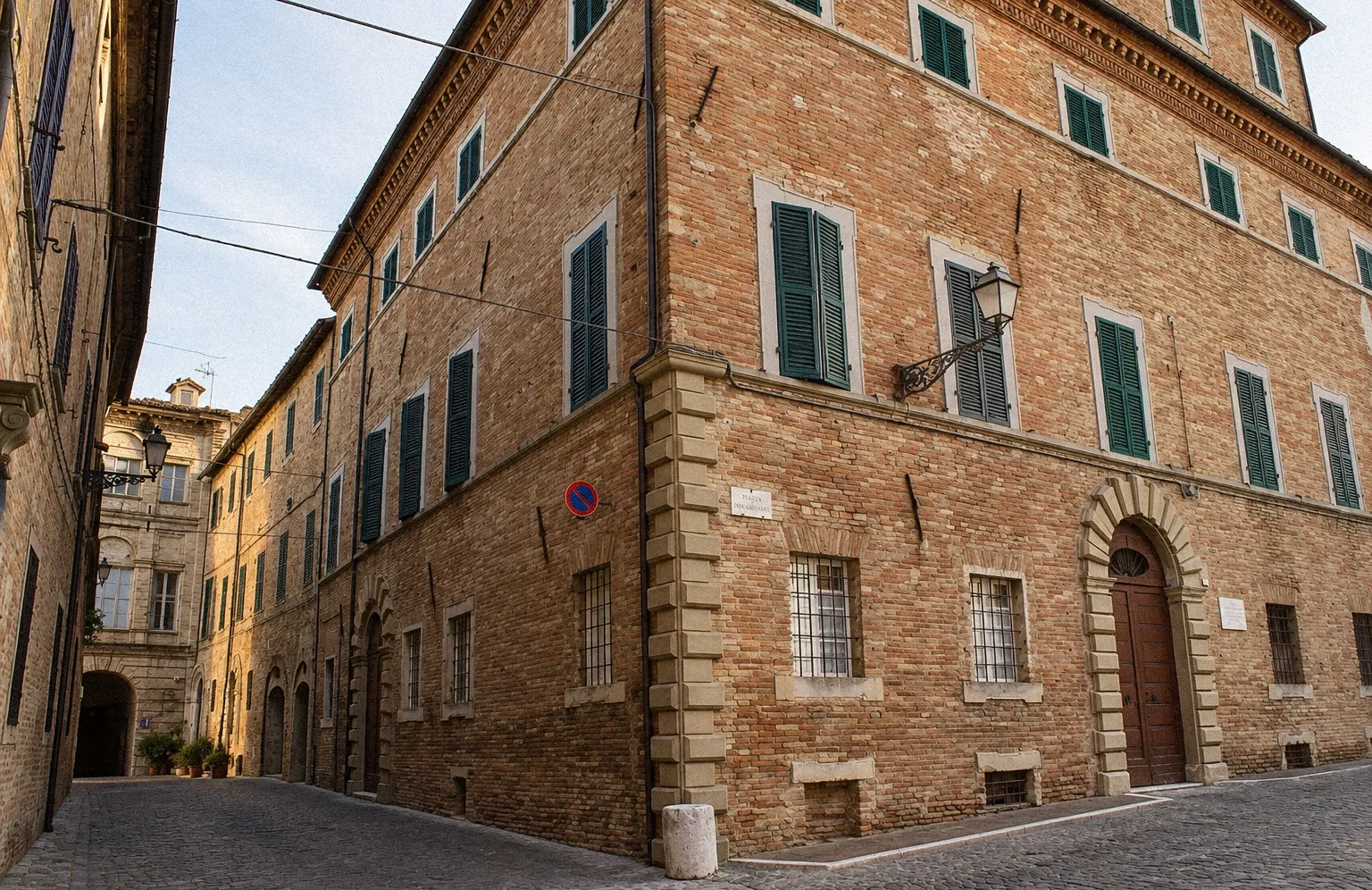
Not simply an apartment, but the piano nobile of the palazzo that once belonged to the Counts Franceschini: some 400 square metres of salons, bedrooms and a large dining room overlooking the village square.
The ceilings of the salons and bedrooms are decorated with seventeenth-century stuccoes and paintings; the floors are original polychrome terracotta and the furniture is antique.
Choose a room and browse the photographs, as on a guided tour of the piano nobile.
The reception room: stucco ceiling, period clock and candelabra, armchairs beside the fireplace.
Green Salon, overview
The palazzo was built in the seventeenth century on the square of Montenovo, the old name of Ostra Vetere. The piano nobile keeps its original stuccoes, paintings and terracotta floors.
The village takes its present name from the ruins of the Roman town of Ostra, on the river Misa.
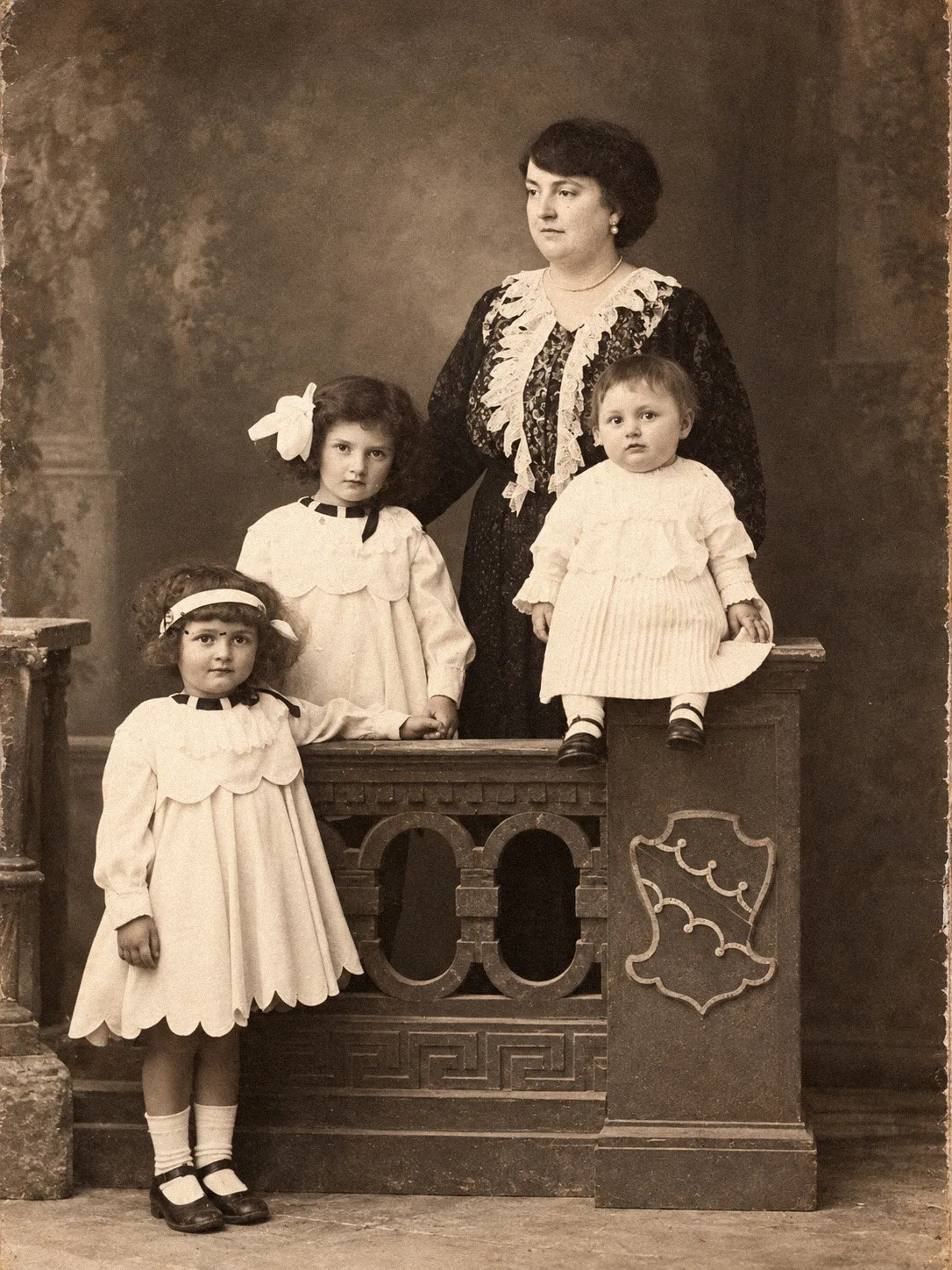
Carolina Borgiani, wife of Giuseppe Fornaroli, was the owner of the palazzo. She is portrayed here with her daughters.
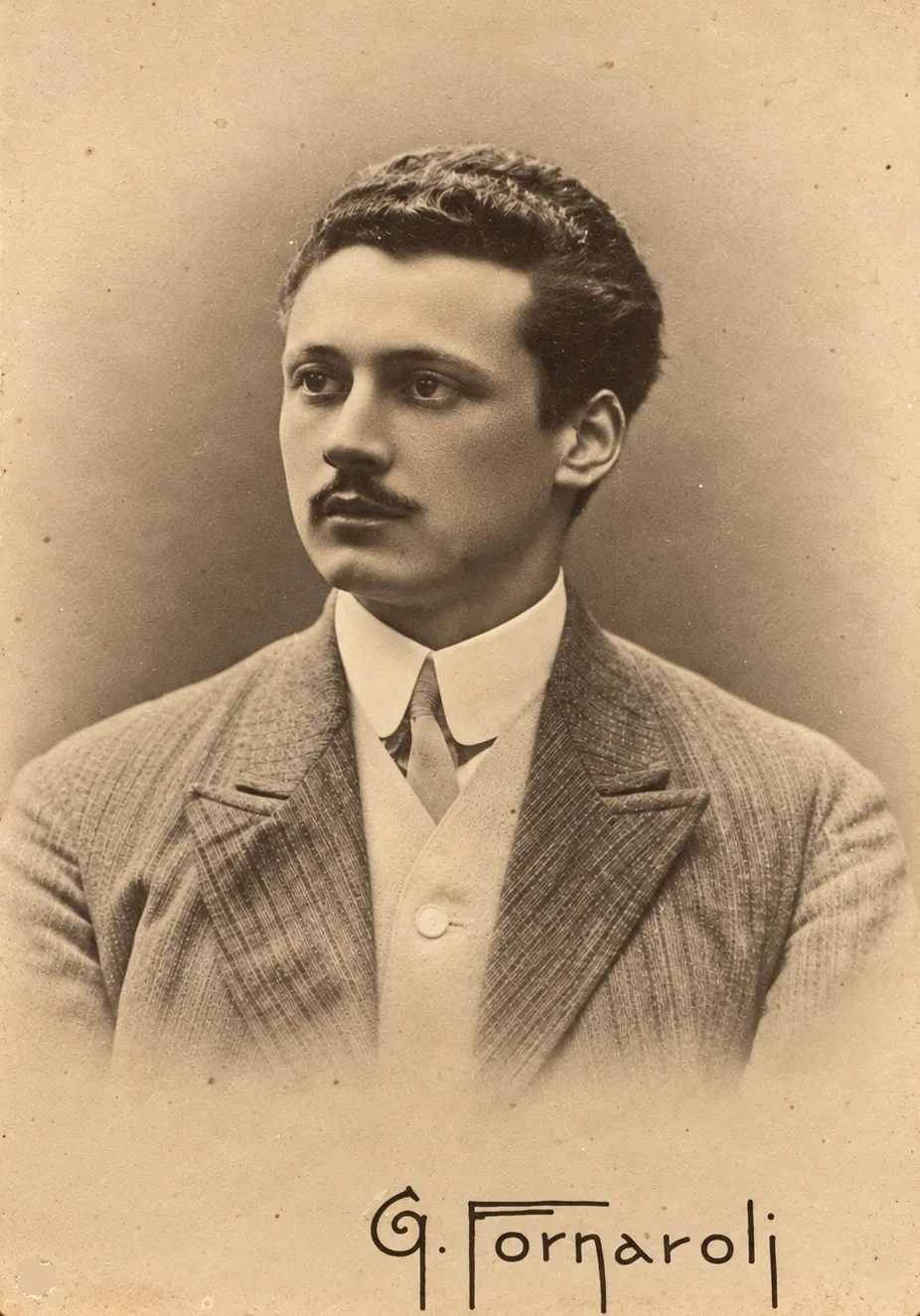
Dr. Arnaldo Giuseppe Fornaroli lived here: a pioneer of telecommunications and the inventor of Italy's first automatic telephone exchange.
A plaque on the façade has honoured him since 3 May 2009.
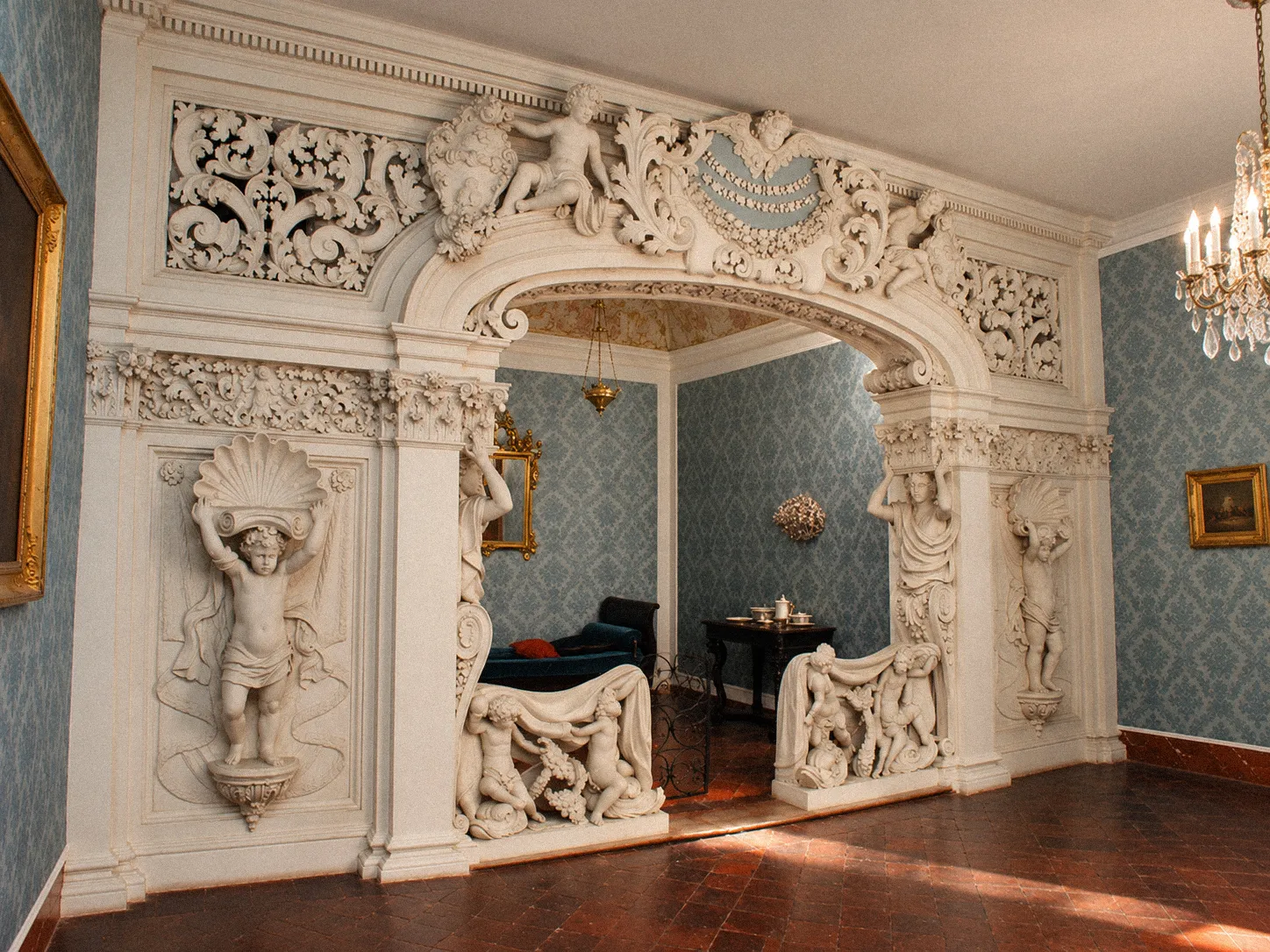
In the adjoining Palazzo Buti, once owned by a cousin of the family, a sculptural group fills an entire wall of what was once an alcove.
Ostra Vetere keeps the medieval layout of ancient Montenovo: walls, gates and brick lanes climbing to the square that the palazzo overlooks.
Times, amenities and how to reach Ostra Vetere.